Tuesday, 19 December 2017

You'll truly wish you hadn't read this.

Leave a Comment


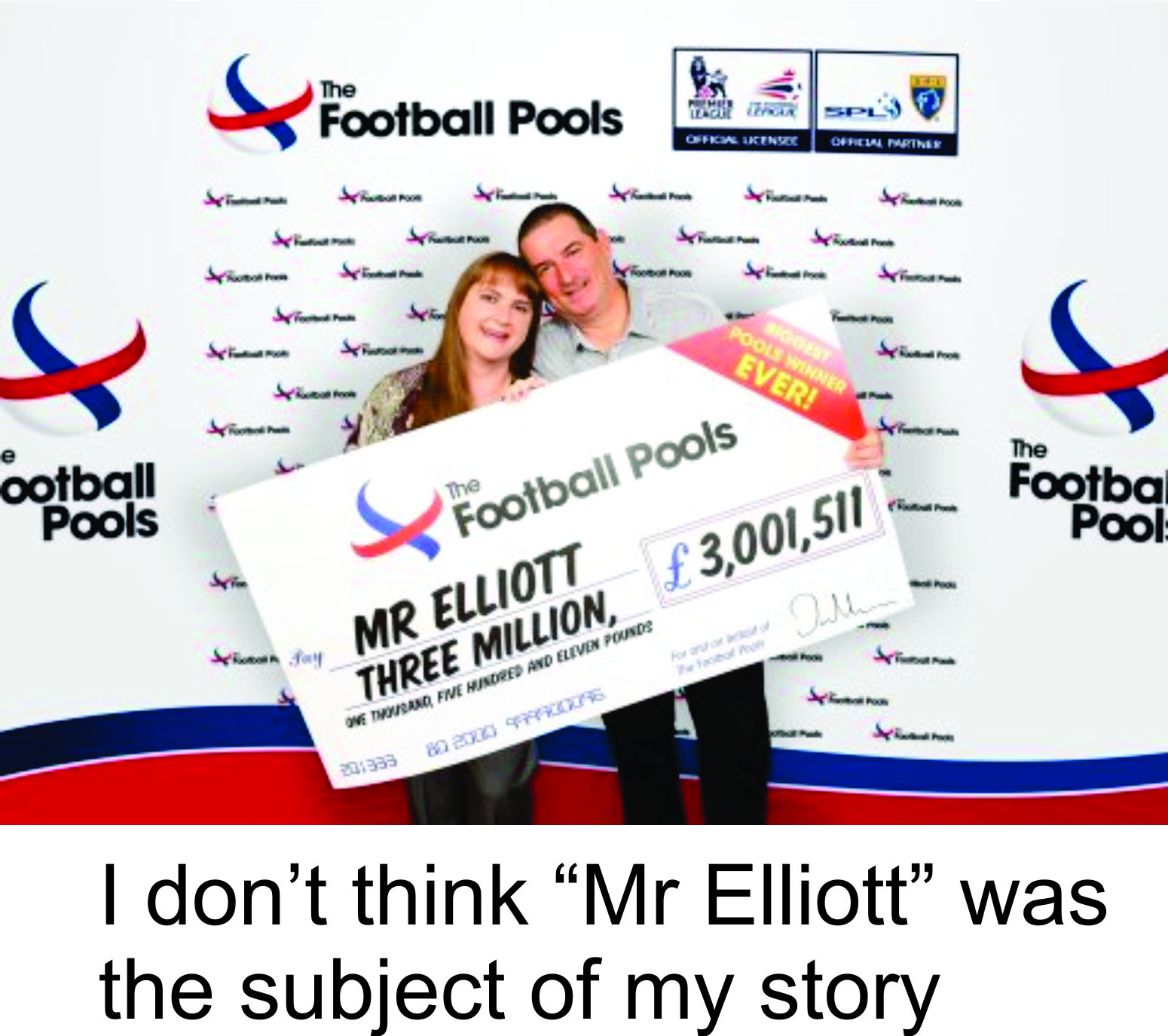
When I’ve read about some of the recent Lotto and Power Ball winners I am reminded of the story of the Englishman who some years ago who won over three million pounds on the football pools.

The first thing he decided to do was to buy himself a car, so he fronted up to the Rolls-Royce agency and requested a brand new Rolls-Royce. The salesman asked him did he want a Corniche or a Silver Cloud? The man said he knew nothing about cars; in fact he had never owned or even driven a car, so he said he would need some guidance on just what model to acquire. The salesman was astounded. He suggested that if he’d never driven a car it would be a big mistake to start out at the top of the range. He thought he would be better to perhaps buy a Mini. The man agreed and enquired just where he would be able to buy a Mini.

So the Rolls-Royce man took him outside and showed him a premise just down the road with a big sign that said Austin-Morris and told him that the good people there would be able to sell him a Mini. When he approached the salesman at the Austin Morris agency about buying a Mini he was asked did he want a 750cc model or a 1000cc model and did he want a standard version or perhaps a Mini-Cooper. He explained that he knew nothing about cars; in fact he’d never owned one so he would need some help in making the choice. The salesman expressed surprise. Did he think it was a good idea to go out on the High Street with a new car when he’d never owned one and had never driven one. Our man agreed that it was risky and the Austin-Morris man suggested he should perhaps start off with a motor-bike.
He directed him across the High Street to where a big sign said BSA-Triumph and so over the road he went and inquired about purchasing a motor bike. “Two-stroke or four-stroke?” he was asked, and “How big a motor would you like?” The man was confused further and explained to the good people at the motor-bike shop that he didn’t have a clue what two stroke or four stroke even meant and he was unsure about the size of the motor. He had he said never owned a motorbike and had never ever contemplated riding one.

The salespeople at BSA-Triumph were astounded. “Just look at the traffic out there!” they warned, which was bumper to bumper and looked un-navigable. “Do really think you would last five minutes out there on a motor-bike, given that you’ve never ever ridden one?” they asked. They suggested he’d be better advised to abandon his plans and instead buy a push-bike.

“Where would I buy a push-bike?” our man wanted to know and he was directed to a shop just over the road that had a big sign announcing that it sold cycles and toys.

He crossed the road once again and inquired at the bike-cum-toy-store about purchasing a push-bike. “Certainly sir,” said the assistant, “What type would you like? A Raleigh Twenty perhaps; would you like Sturmey-Archer three-speed gears and do you want handbrakes or back-pedalling brakes?”

The man explained that he’d never ridden a push bike; knew nothing about them and would even need some instruction on how to mount one. The salesman was amazed. “Do you really want to go wobbling out on to the High Street with all that traffic on a push bike that you’d never ridden before?” he asked incredulously, “Why you could get yourself killed!”

“Well then,” asked our cash-rich, but now wearying consumer, “What should I buy?”

“If I were you,” said the salesman, “I’d buy a hoop and a stick.”

“And where would I get a hoop and a stick?” our man wanted to know and was directed down to the toy section of the shop where a most obliging lady behind the counter happily sold him a hoop and a stick.

So he went off merrily bowling his hoop with the stick along the footpath all the way to the end of the High Street humming merrily to himself and before long he found himself out in the country. After a time he happened upon a picturesque country pub. So he steered his hoop with his stick into the adjoining carpark, laid them both down in a parking spot and then went inside and ordered: “A pint of your very best ale, please landlord.”

He felt at peace with the world. A pint of beer in his hand, no debts, money in the bank and a brand-new hoop and a stick. He allowed himself a second pint and by now feeling totally fulfilled, went back out to the car-park to retrieve his prized acquisition. To his absolute dismay the hoop and the stick were gone.

He was heartbroken. He went back inside and complained bitterly to the publican. “What sort of an outfit are you running here landlord?” he wanted to know. “A man comes in for a quiet beer, minds his own business and than goes out to your car-park to get his hoop and his stick and someone has stolen it. Just what kind of hostelry are you operating?”

The landlord was sympathetic. “Don’t get your toga in a knot,” he said. “Anyway how much did the hoop and the stick cost you?”

“50p” the man said, so the publican went to his till and took out 50p and gave it to the stricken football pools winner. “Here you are, here’s the full cost of your hoop and your stick.”

“It’s all very well trying to placate me by giving me the money back,” said our man, “But how the heck am I going to get home?”

(First published 31st March 2006)

"There is nothing more reassuring in the world than an unhappy lottery winner." - Tony Parsons


Read More...

Friday, 15 December 2017

Will homes of the future need kitchens?

Leave a Comment


Anyone skirting the town of Masterton in the 1950s looking for a bite to eat or the opportunity to take home food cooked and ready to consume had surprisingly few choices. For special occasions fine dining was available at the Empire or Midland hotels, both owned by the Licensing Trust.

They offered white tablecloths and serviettes, and a confusing array of cutlery that included fish knives that looked like oversized butter knives, and butter knives that we never saw at home anyway. Working your way in from the outside edges of the silverware was part of the mystique of the hotel experience, even if the food itself, in hindsight, was pretty bland.

You fronted up in your best clothes.

Fish and chip shops invariably had dining rooms at the rear of the premises serving hearty and reasonably-priced fare to the proletariat and the mine hosts were well-known and well liked. Ted Tozer at Tozer’s Fish Shop, Wally Grbavac at the A1, Mattie Nola at the Central and Mattie Kurta at the Wenvoe.

Fish and chips were the only takeaways on offer, although for a change of diet you could ask for sausages and chips.

New entrant was the Chief Shanghai CafĂ© which burst on to the scene in the late 1950s opposite St. Luke’s, then known as the Knox Church. Ebullient owners Jimmy Yee and Alan Chan served Chinese food with a numbered menu that was a new experience for rank and file Mastertonians, though I noticed most who dined there still ordered steak and chips.

You could get a cup of tea and a sandwich or a slice of cake upstairs at Hugo and Shearer’s or the WFCA department stores. Teabags were unheard of; tea was served from a silver teapot in Royal Dalton cups and saucers.

Two coffee bars may have slipped into my 1950s timeline, the Kalinga and the Calypso and maybe even the Waldorf restaurant.

So with my best endeavours memory-wise I can only come up with twelve outlets retailing ready-to-eat food in the Masterton CBD back then. In 1950s Masterton there would have been a population of around 15,000 and now we’re looking at close on 25,000 so today there will be more cafes, restaurants and takeaways to cope.

And you bet there are; at my last count there were sixty-six outlets to succour an apparently ravenous population and I’m not including the petrol stations who offer coffee-to-go and snacks and pies

After coffee bars came into vogue, licensed restaurants appeared and then the franchises: Kentucky Fried Chicken, McDonalds, Pizza Hutt, Subway, Burger King, Hell’s Pizzas, Dominoes and Pita Pit. Ethnic restaurants evolved and gave our palates worldly insights and as our tastes became more sophisticated the Chinese category didn’t need to offer up steak and chips.

Meanwhile lots of autonomous cafes appeared as if from nowhere, most showcasing the same fare: quiches, pies and unappetising vegetarian dishes; plus cakes, muffins and scones twice as large as their 1950s predecessors, but apparently necessary to fill our increasing body weights.

If you look back at my original twelve you will see only the Waldorf remains, although the A1 name persists, but at a different venue in a different style.

If I had written this column a few weeks ago the number of eating houses would have been sixty-four. But recently the Screening Room restaurant opened in Kuripuni and just this week Don Luciano’s started trading on the corner of King and Chapel streets.


Luciano’s outgoing and gregarious host, Marvin Guerrero, probably has enough personality to make it a success, but he needs to remember that 65 other nervous business owners will be looking on apprehensively wondering just how far the discretionary dollar can stretch.

“In every restaurant, the hardness of the butter increases in direct proportion to the softness of the bread” - Harriet Markman

Read More...

Friday, 8 December 2017

A royal connection does wonders for business

Leave a Comment


I’ve been enamoured with Meghan Markle ever since I started watching Suits on Netflix about a year ago. The lawyers may have been playing the lead roles, but it was the paralegal who took your eye in most episodes.

Well mine anyway.

And so I am full of admiration for Harry, but then again that’s what prince’s do, don't they? They marry the most beautiful women in the world. And they don’t have to be handsome princes either; think Prince Charles.

But I am delighted that blood other than blue is now going to invade the royal gene pool.

Meghan’s mother is an African-American and her dad is of European extraction.

The current royal bloodline has large dollops of German lineage; much of the history of how this came about is hidden by Royal decree because we, the great unwashed, might get upset if we got to know some of the scurrilous background.

But we mustn’t get too excited about the potential change. Markle sound uncommonly like Merkel so she might just be strengthening the existing bloodline as well as infiltrating strains from the African continent.

And I do have a warning for Harry.

Dr Hook and his merry band of medicine men once warned in a mega-hit that if you’re in love with a beautiful woman, it’s hard. Hook reckoned everybody wants her, everybody loves her and everybody wants to take her home.

Well Harry’s taken her home, but he’ll need to watch his Ps and Qs. (I’m talking Philip and the Queen here, by the way.)

So where to now? Well there’ll be the wedding of course, beamed worldwide to an audience of multi-millions, our womenfolk will painstakingly pore over the wedding dress and the bridesmaid’s frocks, and Ed Sheeran will probably croon a love song in St George’s Chapel before he shifts permanently to New Zealand.

Meghan will take all this in her stride; she’s been there and done that, unlike any other royal in modern times. She recently passed muster with a stunning performance with her betrothed when they did a walk-by amid fawning crowds in Nottingham. The handbag she was carrying has apparently gone viral and the small Scottish label, Strathberry, is being swamped with orders.

It reminded me of the time when the Queen Elizabeth and Duke of Edinburgh visited Masterton circa 1953 and they lunched at the Empire Hotel in Queen Street. As they drove northward to the next town in their itinerary the butcher next door to the Empire who served the hotel (a Mr Neate) proudly wrote on his window: “The Queen ate our meat.”

Quick as a flash my father came out with a brush and white poster paint and wrote on his butcher’s shop window: “God save the Queen.”

I won’t be going to the wedding. Devotees of Ms Markle’s beauty and acting ability are not automatically on the guest list and about 200 million people will need to die before I am next in line to the throne.

The longest sentence you can form with two words is “I do”. – H. L. Mencken

Read More...

Thursday, 7 December 2017

Pulling the wool over other people's eyes

Leave a Comment


When I was a kid, on every first day of April, at some ungodly hour of the morning, just before he went off to work, my father would wake me with some tall tale that would encourage me to leave the comfort of my room and make an inspection. A claim that it was snowing, or even that there was an elephant on the front lawn would fool me easily and I would bound out of bed to look out the window, only to met with a chant of: “You silly April fool!” or similar.

I gather it wasn’t just a tradition in our family, but I suspect that it has died a slow death in recent years. Certainly I must confess I haven’t kept up the tradition myself of late.

It wasn’t always the case. The best April Fool’s fun I ever had was back in the seventies when I booked some air-time on the only local radio station at the time, 2ZD. Old school friend Arch King was the breakfast announcer and assistant manager to Johnny Shearer, neither of whom were averse to having a bit of fun.

We pre-recorded an interview that purported to be broadcast live. There were sound effects of hammering, banging and general carpentering and Arch said he was in Long’s Meat Market’s shop in Queen Street and allowed me to describe the scene. I told the listeners that the noise was being made by a couple of builders who were erecting a sheep pen in our front window. More sound effects, as we appeared to be walking through doors to the rear of the premises, and Arch spoke of a small stock trailer in the back yard that was housing a strange looking sheep.

He asked that I describe the rare animal to the listeners. I was happy to oblige. The sheep I said was unusual in as much as it had three back legs. Butchers were always short of legs of lamb and this rare breed of sheep was going to resolve that shortage. I said they had only recently been discovered in the hinterland of Iran where they had subsisted on sand and the odd bit of tussock. I explained that we’d imported a number of them and that had them out on our small farm at Norfolk road where they were being kept in a sandpit. We were slowly weaning them off the sand and on to the lush grass. At the moment, because of their conventional diet, the meat tasted a bit gritty, I claimed, but once they had been weaned off the sand and were fully digesting the pasture we were providing, I was sure they would be as palatable as our conventional breeds.

I said we were going to put this sheep in the newly erected pen in our shop window and the general public were invited to come and inspect the intriguing animal before it was taken back to the sand pit at Norfolk road at midday. Traditionally, April Fool’s Day finishes at twelve noon.

I added a rider. Because this particular type of sheep was not well established in Iran, there was no title for the breed. I offered a $20 meat pack for the person who came up with the best name.

The interview was broadcast at ten to eight on April the first - a Monday morning. Within minutes the road outside our shop was crowded with cars; many had to be double parked. First to arrive of course were those people coming into town with their car radios on. But they were soon joined by a host of others; often mothers with kids, the kids, in some cases, still in their pyjamas.

The footpath was literally streaming with people desperate to see the five-legged sheep. They weren’t totally disappointed. In the window we had a children’s play pen and in the pen was a life-sized cardboard cut-out of a sheep with three back legs. Signwriter Bill Wellington had crafted this for us and there was a balloon coming out of the sheep’s mouth that said ‘Today is the first day of April’ and another sign at the back pointing to the third leg that read: ‘This leg is for pulling!’

Most people saw the funny side and business was brisk. Those who didn’t want to admit they been caught out came in and bought something; many of these folk had never dealt off us before in their lives. The Times-Age featured the story with a photo of the cut-out sheep on the front page.

Wairarapa College teacher Don Simpson won the meat pack. He came up with the name ‘Sloof’ which is of course backward fools and we deemed this to be most appropriate. You’d be amazed how many people sent in serious entries.

A few days later the wife of a prominent farmer came into the shop and told us that on the Monday morning she was cooking breakfast for her husband and was surprised when he came down the stairs all dressed up.

“I thought you were going to work on the farm,” she said, but her husband told her that he that just had to go into town to have a look at this remarkable sheep in Longs’ butcher’s shop window.

She said she marched him over to the calendar and reminded him of the date. He went meekly back upstairs, changed into his old clothes and spent the rest of the day at the back of the farm. “When he realised it was April the first,” she said, He looked very sheepish,”

Well he would, wouldn’t he?

(First published May 3rd 2006)

“These are the good old days. Just you wait and see.” Steve Turner.

Read More...

Friday, 1 December 2017

A curmudgeonly report on the perils of travelling

Leave a Comment


We recently went on holiday to the ‘winterless north’ of New Zealand. When you’re retired the word “holiday” doesn’t have the same ring to it or the appeal that it once had and the old NAC slogan ‘flying is the way to travel’ now makes good sense. We drove on the roads and from Taupo north they are nightmarish with articulated trucks and campervans sharing the highway with cars and passing lanes seemingly few and far between.

One of the reasons for the journey was to visit relations who have built a new house overlooking the Kaipara Harbour north of Auckland. Our timing was a bit astray as the house was unfinished and the landscaping non-existent. Adding to that, the Kaipara is less picturesque than it sounds.

We had intended to venture further to the Bay of Islands, but Northland’s roads are narrow and only two-way with a number of one-way bridges that National promised to fix when they were fighting off Winston at the election-before-last.

Winston won on that occasion, so the promised bridges have never materialised.

We realised we’d have to encounter the same traffic snarl-ups on the home stretch so it made no sense to carry on. We overnighted at Dargaville and came back through John Key’s old electorate, Helensville. It seemed a world away from Parnell, where Key actually lived and if names mean anything it should surely have been Ms Clark’s constituency.

In Auckland we went through the new Waterview tunnel which is inaptly named as there is no water within sight which is just as well as it dips down rather frighteningly as you enter and is eventually 45 meters underground. I understand it is built below housing estates so some of them must have had vast basements that needed to be avoided.

We came back through Rotorua and Taupo with a fleeting glance at Tauranga.

No need to describe Auckland’s traffic, we regularly view it on TV news channels, but I can report that poor old Tauranga is now suffering from the same dilemma.

Rotorua was a sight to behold; it’s about five years since we were there last and it’s looking better than ever. We stayed in the near-new Millennium Hotel and the cavernous foyer was filled with tourists coming and going the whole time.

We booked our accommodation one day ahead on-line via my cell-phone and although the premises generally looked fine on the website they were often pretty substandard when you arrived. Despite Trivago’s glamorous TV ads that display spacious rooms as low as ninety-five dollars we paid at least two hundred dollars a night, and tended to be given the worst room in the least attractive section of the complex.

I complained about this to one owner who told me it was my own fault for booking through an agent rather than ringing direct. He said, “We hate you guys when you do that because the booking company takes our net profit in fees.”

Our last two nights were in Taupo, so I rang ahead directly to the Wairaki resort only to find when we got there our room was at the back corner of the complex, our view was over a service lane and there was no likelihood of sun ever streaming into our room.


It’s a grand place; 175 acres of marvellously manicured tree-lined grounds, with tennis courts, a nine-hole golf course, unique geothermal features which allow for two heated swimming pools, and over 200 rooms. My guess is that less than twenty of these were occupied while we were there and yet we got the same standard of accommodation as if we had booked through an agent.

In the last few years we have generally holidayed in Australia which is a cheaper destination than New Zealand. We will often rent an apartment on the Gold Coast adjacent to a beach with three bedrooms and two bathrooms, a large lounge and a well-appointed kitchen. All this for $750 a week.

In the pokey little NZ motel unit you have to sit on the edge of the bed to watch TV and the shower is usually over the bath which probably doesn’t comply with our stringent new health and safety regulations

In an effort to encourage us all to holiday within our own boundaries Tourism New Zealand used to say: “Don’t leave town ‘till you’ve seen the country” and feature a Kiwi kayaker who was about to go over Africa’s Victoria Falls.

From our experience, they’ll have to do better than that.

“One way to solve all the traffic problems would be to keep all the cars that aren’t paid for off the streets.” – Will Rogers 

Read More...

Tuesday, 21 November 2017

Coalition looking for a new high

Leave a Comment


I recently spoke to a lady who works as a counsellor at an alcohol and drug addiction centre in Auckland. She told me something I guess we all knew; the scourge of methamphetamine usage is reaching epidemic proportions.

She said that the gangs are skilfully marketing the product. A “hit” costs about a $100 a time and most of the addicted require at least one daily dose. Naturally I wanted to know how anyone could afford a $700 a week habit. She suggested robbing or defrauding fellow citizens was one option though many addicts are being recruited by their supplier to become dealers themselves.

It reminded me of the Amway vendors of old. Amway put out a glossy catalogue full of desirable products, but any Amway seller I encountered seemed more interested in me becoming sub-agent rather than actually wanting to sell me something out of the brochure.

So enrolling new peddlers is the answer to all product marketing, but with a devastating effect on society when the merchandise is as additive and harmful as methamphetamine.

She also allowed that she was aghast that the Green party had convinced its coalition partners to have a referendum on legalising cannabis. She said she has never ever counselled a meth addict who hadn’t initially started out as a marijuana user, sometimes as young as ten or twelve years old.

So I asked a keen Green supporter to counter this argument. His response was plausible. The gangs, he opined were pretending not to have cannabis available because they knew it wasn’t addictive. Instead they would rather sell you “P” as this meant you would constantly come back for more. “By making cannabis legal, with the government raking in the tax,” he said, “you kill off the gang’s sources of income.”

Marijuana has been legalised for those over the age of 21 in Colorado. This was the first American state to do so and the rest of the US has been watching with much interest. Colorado has a population that is not too dissimilar to ours and reports show that their retail pot-shops are raking in more than a million dollars a day.

It’s not just cannabis itself that is for sale, but pot-infused chocolates, biscuits, creams, lozenges and tinctures.

Recent reports I have read show that in Colorado fatal road accidents involving drugged drivers and presentations at hospital emergency departments have increased markedly.

Meanwhile we are being softened-up for the referendum with regular reports of the magical medicinal properties of cannabis.

The CEO of the Waitemata District Health Board, Dr. Dale Bramley, says his DHB is responsible for running drug and alcohol addiction therapy services for the Auckland region and the staff see the clinical and social impacts of cannabis use on a daily basis.


He said the link between chronic cannabis use and mental health issues is well-proven. “A substantial number of individuals presenting at the hospital’s mental health services have their presenting problem complicated or worsened because of the use of cannabis.

“Smokers of cannabis are about 2.6 times more likely to have a psychotic episode than non-smokers. High doses of marijuana can produce a temporary psychotic reaction and in some users can worsen the course of illness in patients with schizophrenia.

“Numerous studies following users over time and through the experience of the DHB’s own drug and alcohol services show a link between marijuana use and later development of psychosis – those who start young and smoke heavily are at an increased risk for later problems,” he wrote in the New Zealand Herald.

Marijuana use has been linked to other mental health problems, particularly among the young, who can suffer from depression, anxiety, suicidal thoughts and personality disturbances, including lack of motivation to engage in activities they would usually find rewarding.

Dr Bramley said we should not be conveying to our impressionable teenagers that cannabis use is harmless. It’s not and it never has been. Any initiative that potentially makes cannabis more freely available will only further increase the burden of medical, psychological and social problems that cannabis use already has on our financially struggling health boards and our communities.

So, varying opinions; you’ll have to work it out for yourself.

“Kids are no sooner off the pot than they are back on again.” - Stuart Francis

Read More...

Saturday, 4 November 2017

Is Jacinda going to take us back to the future?

Leave a Comment


I used to own a trucking company. Well, that might be a bit of an overstatement; in fact it was only one truck. Even then I only half-owned it; my partner in the venture was Max Stevenson, a rival butcher from down the road. Truth is we didn’t own much of it either; that prerogative went to the finance company.

Anyway, despite being fierce rivals in the retail meat trade, we thought it prudent to combine our talents to jointly own a truck that could deliver carcass’s from the Waingawa freezing works to our two shops in Queen Street. While we were about it we offered the service to all the other butchers in the Wairarapa, most of who responded positively. By combining our surnames we came up with a name for the enterprise, Stevlon, which sounded more like a cosmetic manufacturer rather than a raw meat company, but then on reflection, there are some disturbing similarities.

To deliver meat to other retailers meant we had to apply for a cartage license; a tiresome and costly necessity in those days before transport deregulation. You’re never going to believe this, but our application was opposed by the New Zealand Railways. They challenged all license applications as a matter of course.

A hearing took place in the Masterton County Council boardroom and two high powered, and no doubt highly paid, lawyers from NZR endeavored to have our application dismissed.

It was not lost on the hearing commissioner, genial Carterton lawyer Ian Wollerman, that there was going to be some difficulty in railways picking up the meat at Waingawa and delivering it in the wee small hours to a butcher’s shop in (say) Martinborough, so he granted us our license.

We engaged a driver named Herbie Karaitiana, an excellent employee who’d had many years’ experience driving carcass-meat trucks from Wairarapa to Wellington. Our run only took about three hours a day from 5 a.m. to 8 a.m. but conscientious and fastidious Herbie would have spent another hour or so keeping the truck scrupulously clean. The driver’s award at the time however required that we pay our driver a minimum of forty hours a week, which we accepted and factored into our charges.


Everything went along swimmingly until the Drivers Union heard about out little operation and called to see us. All hours worked before 8 a.m., they said, required the driver to be paid at double time rates. We pointed out that this was in fact the only hours our driver worked, but he was being paid for a full forty hours. Sorry said the union (another exaggeration; they never say sorry) but you must pay your driver fifteen hours at double time and the other twenty five hours (remember these were the hours he didn’t work) at the normal hourly rate. We squealed, but they were unsympathetic.

Then they threw another doozy at us. We needed to pay the driver an extra $1.40 per hour “key money.” This expanded to $2.80 per hour on double time of course. The reason for this new imposition, they said, was that he had to carry the keys of all the shops he delivered to, and this was an added responsibility.

We rang the other local trucking companies to see whether this last charge was justified. They said it wasn’t, but the Drivers Union had been trying to instigate it for years. It was clever tactics to pick off a small company with key money and this would create a precedent that they would then bring to the next wage negotiations. It would then be difficult not to have it included in the national award. They pleaded with us not to give in.

I must point out that Herb. Karaitiana did not instigate any of this and during negotiations tried to take our side. He was taken outside by one of the union heavy’s and told to shut up and mind his own business. The end result was that we had to sell the business to an owner-operator who was not bound by union rules. Herbie lost his job.

I tell you all this because it’s becoming clear that our new government is keen to take us back to the days of the crusading unions before the reformation created by the Employment Contracts Act.

The stand-over tactics we endured by NZR lawyers and bully-boy union officers should remain an unsavoury relic of the past.

Max and I often used to contemplate what might have happened if we hadn’t won the day at the license hearings. We had this abiding picture of a locomotive, with a full head of steam, loaded with carcass meat, chugging down Masterton’s main street, heading for our two shops.

“Every man’s occupation should be beneficial to his fellow man as well as profitable to himself. All else is vanity and folly.” - Phineas T. Barnum

Read More...